


.png)
How Home Services Companies Rank in Google AI Overviews and AI Mode
Google's AI search guide says "same rules, new surface." That's half true. The mechanics changed. For home services companies, six things matter most: page speed, real photos, unique local pages, GBP consistency, authentic mentions, and real expertise.
Google Just Told You How to Show Up in AI Search. Here's What It Actually Means for Home Services.
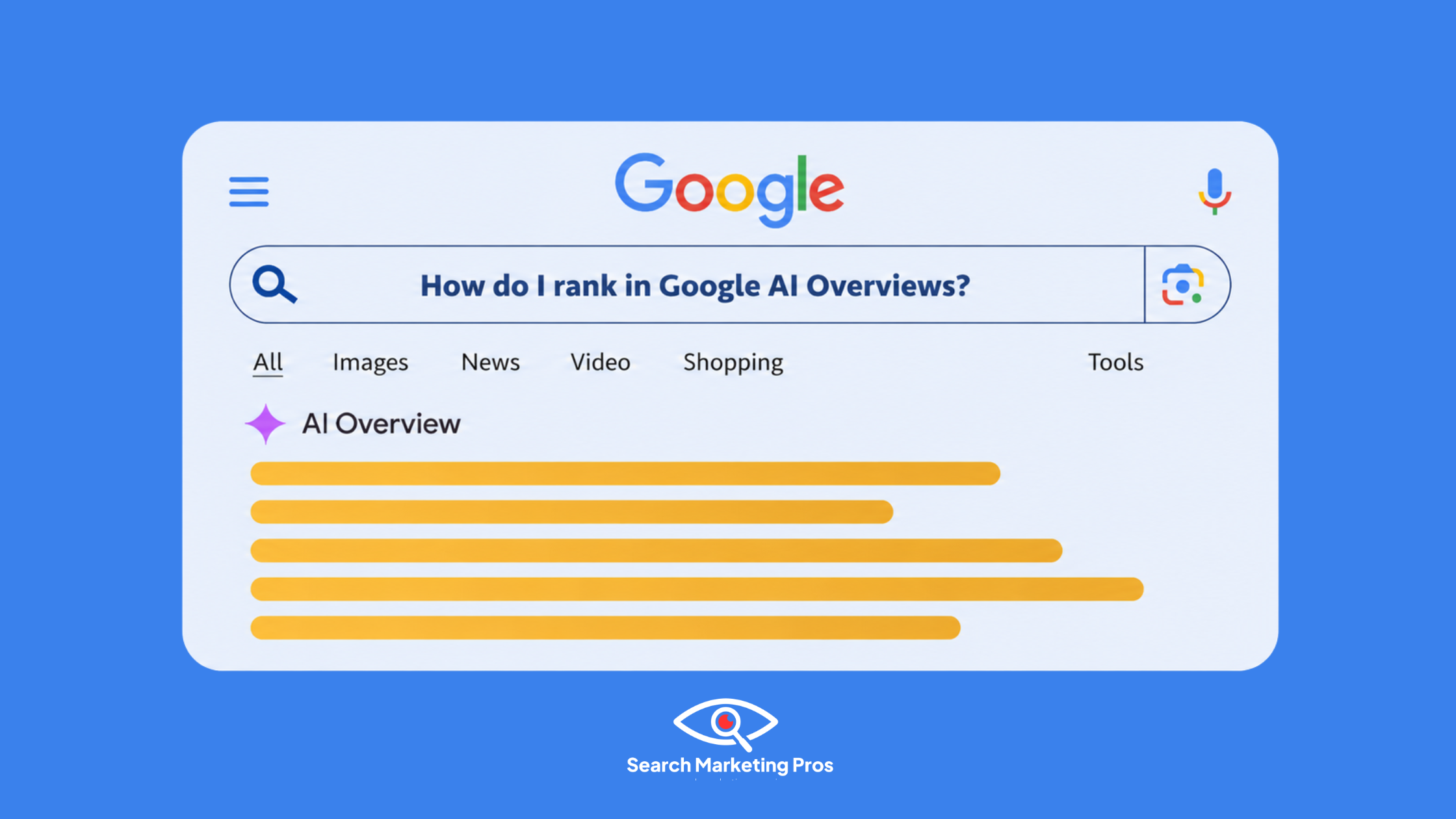
Google published a guide on optimizing for AI Overviews and AI Mode, found here.
It is, depending on how you read it, either the most useful or the most disappointing thing they've written in years.
I'll save you the click. Then I'll tell you the part Google left out, because if you run marketing for a home services company, that part is the whole game.
The Lie Google Wants You to Believe - It’s Just SEO
Google's whole message in this guide is: AI search is just SEO. Same fundamentals. Same rules. Don't overthink it.
That's half true. The fundamentals do still matter. But the mechanics underneath have changed in two specific ways that Google does not fully spell out, and that change everything about how a home services company gets found.
1. The Truth: How AI finds your content is different (this is called RAG)
Traditional search ranks pages. AI Overviews and AI Mode pull passages.
When a homeowner asks Gemini "how much does it cost to replace an AC unit in Phoenix," the model does not return ten blue links. It retrieves chunks of content from sources it trusts, pulls them into a context window, and generates an answer. This is called Retrieval-Augmented Generation, or RAG.
What this means for you: a page can rank #4 organically and still get cited in the AI answer, because one paragraph on that page was the cleanest answer to the question. The flip side is also true. You can rank #1 and get skipped because your content is buried in three paragraphs of fluff.
The takeaway: clarity at the paragraph level matters more than clarity at the page level. Every section of a service page should answer one specific question completely.
2. The Truth: How AI validates your content is different (this is called query fan-out)
AI Mode does not just answer the question the homeowner typed. It quietly breaks that question into a handful of related sub-questions, runs each one, and stitches the answers together.
So a search for "cost to replace HVAC in Memphis" actually runs as something like:
• Average HVAC unit cost
• Labor cost for HVAC installation
• Permit cost for HVAC in Tennessee
• SEER rating cost differences
• Average HVAC install timeline
• HVAC contractors in Memphis
Your page now has to win on questions you never explicitly targeted. That is a different writing problem. You don't optimize for the keyword anymore. You optimize for the conversation the homeowner is actually having in their head.
The Takeaways from Google's Guide
What actually matters:
• Helpful, original content written for people, not algorithms. The same thing they've said for a decade, except the bar is now much higher.
• Technical accessibility. Googlebot has to be able to crawl, render, and index your page. If it can't, you're invisible.
• A good page experience. Fast loading, mobile-friendly, not buried under pop-ups.
• Content that matches how people actually talk, not how SEOs think they search.
• Letting Google use your snippets. If you have nosnippet or max-snippet limits set on your site, you don't show up in AI answers.
• Multimodal content. Real images and video, captioned and described properly.
What doesn’t matter:
• A separate "AI site." It’s not getting indexed or pulled from.
• LLMS.txt records. Fancy way of doing something with no impact.
• Special markup or new schema invented for AI. There isn't any.
• Stuffing your page with "as an AI language model" phrasing or LLM-friendly jargon.
• Optimizing for any one specific AI surface. The index is the index.
• Most of the GEO and LLMO courses being sold to you right now.
What is sitting underneath, unsaid:
• The bar for "helpful content" just got higher, and almost nobody in home services is meeting it.
• AI Overviews are quietly eating top-of-funnel traffic. Google is not going to apologize for it.
• The winners will be the companies that can prove they're a real local business with real expertise. Not a national lead-gen site pretending to be local.
What This Means If You Run a Home Services Company
This is the section Google did not write. It is the one that matters.
If you sell roofing in Tulsa, plumbing in Austin, or HVAC in Cincinnati, here are the six things that are actually going to determine whether you show up in AI answers in 2026.
1. Your duplicate location pages are now actively hurting you
Most home services sites have 40 location pages that are 90% the same content with the city name swapped. That worked for local SEO ranking for years. It does not work for AI citation, and here is why.
The model dedupes. When it sees ten near-identical passages across your location pages, it picks one or it picks none. "None" is what usually happens, and the citation goes to a forum, a Reddit thread, or Angi instead of you.
Every location page needs at least 60% genuinely unique content. Local landmarks. Local building stock. Local climate issues. Local permit nuances. Specific neighborhoods you serve. Real photos from real jobs in that city. If you have 40 cookie-cutter pages, that is not a quick fix, and it is also why you are losing ground.
2. Site speed is no longer a ranking factor, it's a gate
Most home services sites are slow. Bloated WordPress themes. 14 tracking scripts. A 4MB hero video on the homepage. Cumulative Layout Shift scores from hell.
Here's the thing. Googlebot has a render budget. If your page can't render cleanly within that budget, the content does not get fully indexed. If it doesn't get fully indexed, it cannot be retrieved by the AI for an answer. You are not just losing ranking. You are losing eligibility.
Run your site through PageSpeed Insights this week. If your mobile score is under 50, that is the most expensive number on your dashboard, and you probably don't know it.
3. Real photos and video are now a competitive advantage
Home services is one of the only industries where great visual content is sitting on every technician's phone. Before-and-after shots. Job site walkthroughs. "This is what a failing capacitor looks like" videos. Almost nobody is using this well.
Google's guide explicitly mentions multimodal content. Pages with original, geotagged, properly captioned photos get cited more often in AI answers. Stock photos of smiling technicians do not.
Tell your techs to take 3 photos on every job. Use them. Caption them with location and what they show. Stop using shutterstock.
4. Inauthentic mentions get you punished, eventually
If you are private-equity-backed, do not claim family-owned across every directory. If you have 6 real reviews, do not buy 50 fake ones. If you don't actually serve a city, do not build a location page for it.
Here is what's changing. The AI cross-references everything. Your GBP, your Yelp, your BBB, your Facebook, your own website, third-party citations, news mentions, and forum threads. When those sources disagree, the AI gets uncertain. When the AI is uncertain, it picks a different source or hedges its answer. Either way, you lose the citation.
Be the company you actually are. Tell that story consistently in every place you can be found. The companies that win are not the ones with the slickest narrative, they're the ones with the most consistent one.
5. Google Business Profile is now doing the heavy lifting
Your website is one signal. Your Google Business Profile, your reviews, your photos, your Q&A, your service categories, your service area, and your NAP consistency across 40+ citations are how Google verifies you are a real business.
A roofer in Tulsa with 400 reviews, 80 GBP photos, consistent NAP everywhere, weekly posts, and a real owner photo gets cited in the AI answer for "hail damage repair near me." A roofer with a beautiful website, 6 reviews, and a stale GBP does not, even if the website is better.
If you are spending more on your website than on your GBP, you are spending wrong.
6. Real expertise on a real page, written by a real person
You can't bolt helpfulness onto a thin page. The pages that get cited in AI answers are the ones that answer the question better than the AI could on its own. Specifics. Numbers from real jobs. Local context. Real photos. Things only a person who has actually done the work would know.
If a generic LLM can write your service page in 30 seconds, that page is not going to win. If your owner or a senior tech can spend an hour with a writer and produce something that no LLM could have written, that page wins for the next 5 years.
What To Actually Do This Quarter
If you take nothing else from this post, do these six things in order:
• Run a PageSpeed Insights audit. If your mobile score is under 50, this is your first project.
• Audit your location pages. If they're 90% the same content with the city name swapped, you have work to do.
• Update your GBP weekly. Photos, posts, Q&A, service categories. Treat it like your homepage, because for AI search, it is.
• Get your techs taking real photos. Put them on your service and location pages with captions. Replace the stock photos.
• Be the company you actually are everywhere you appear. Audit your descriptions on every directory. Make them consistent and true.
• Check that you are not blocking snippets. Search your site for nosnippet, max-snippet, or noindex. If you find any, talk to your developer today (unlikely you would be – still worth checking).
Stop chasing the algorithm. Start being the obvious answer.
Write things only you could write. Use real numbers from real jobs. Put your name and face on the content. Get reviews. Update your GBP weekly. Make pages that load fast and answer a specific question completely.
None of this is new. That's the point.
The companies that win the AI search era will not be the ones with the cleverest prompts. They'll be the ones who were already doing the boring, fundamental work while everyone else was buying a course on GEO.
Google did not release a guide on how to win AI search.
They released a guide on how to stop pretending it's a different game. The mechanics did change. The fundamentals didn't. The companies that understand both will be the ones still showing up in AI answers next year.
